
What is third party property damage car insurance and what does it cover?
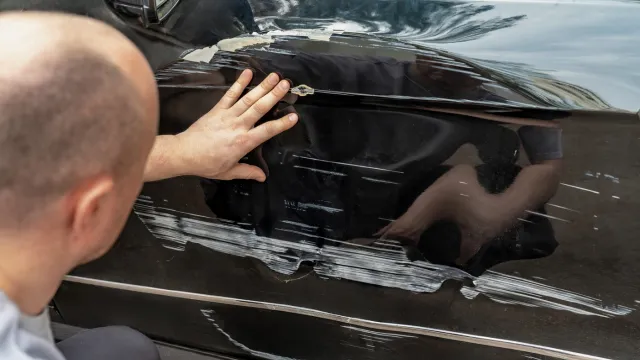
Third party property damage (TPPD) car insurance financially covers damage done by your car to another person’s vehicle or property (fences, garages, sheds etc.).
It also may cover your own legal costs in the event of legal proceedings.
If you submit an eligible claim, TPPD cover should help to pay for the other party’s repair or replacement costs. However, there are caveats:
- Your insurer may charge an excess, an out of pocket charge you have to pay towards any repairs. This amount will be listed on your policy’s Product Disclosure Statement (PDS).
- If the driver of your car at the time of the accident isn’t listed or is under 25 years old, you may need to pay an unlisted driver and/or young driver excess.
- Your insurance provider can deny your claim if you were driving recklessly or illegally, carrying too many passengers or driving under the influence of drugs or alcohol (beyond the alcohol limit for your licence type).
TPPD insurance is also the most basic and cheapest form of optional car insurance.
What does third party property damage not cover?
TPPD insurance will not reimburse you if your car is damaged in an accident, fire, theft or inclement weather such as a storm or hail.
If you want to be insured for the exclusions above, look into a more extensive type of car insurance, such as:
- Third party fire and theft (TPFT): Covers what TPPD does, as well as fire and theft.
- Comprehensive car insurance: Covers what TPPD and TPFT do, plus insures your vehicle against other forms of damage.
Additionally, extras such as windscreen replacement, rental car use and personal effects cover are often only available as add-ons when you purchase a comprehensive car insurance policy.
TPPD insurance will also not cover your liability for injuries caused to pedestrians or other drivers. However, Compulsory Third Party insurance does, and it's mandatory in all states and territories upon registering your vehicle.
Lastly, third party property damage insurance usually doesn’t cover your towing costs. It may cover towing costs for other drivers involved in the accident if you’re found to be at fault.
Because TPPD policies vary between insurers, it’s important to check your policy’s limits or exclusions in its Product Disclosure Statement (PDS) and other relevant documentation provided by your insurer.
What is the best third party property damage car insurance?
The best third party property damage car insurance will depend on your personal circumstances.
Here are considerations to weigh up before settling on an insurer and their TPPD policy:
- Limits and sub-limits: A limit refers to the maximum amount claimable on the entire policy, and a sub-limit is a lower limit for a specific insured event. Ensure your policy’s limits and sub-limits provide adequate coverage for your situation.
- Inclusions and exclusions: Different providers offer different inclusions/exclusions. Make sure you’re comfortable with the level of coverage before making a decision.
- Policy premiums and excess: The higher the excess, the lower the premiums, and vice versa. Strike the right balance between your budget and the amount of risk you’re willing to accept.
- Customer service: Ensure the insurers you’re considering are positively reviewed by other customers for their responsiveness and support.
Keep in mind that the cheapest third party car insurance policy may not always be right for your needs, as:
- You may have to pay a higher excess in the event of an accident
- There may be limits on how much you’re covered for
- There are often more exclusions
- You may miss out on benefits such as coverage for uninsured driver damage.
How much does third party property damage car insurance cost?
The cost of third party property damage insurance is calculated based on several variables:
- The driver’s age (younger drivers under the age of 25 add more cost)
- Your agreed excess
- Your payment cycle (e.g., annual, monthly)
- Make, model and age of your car
- Your driving history
- Your address
- How many kilometres you typically drive in a year
- Whether or not you use the vehicle for commercial purposes
- If you’ve made any modifications to the vehicle.
How to save money on third party property damage car insurance
Depending on the insurer and policy, you may be able to secure a discount or a price reduction if:
- Your insurer is offering a first year discount
- You park your car in a safe and secure location (e.g., a locked garage)
- You sign up for multiple policies from the same insurer (e.g., car insurance and home insurance)
- You pay annually instead of monthly
- You agree to a higher excess in exchange for lower premiums. However, you will be at risk of paying more out of pocket if you’re involved in an accident
- You don’t make a claim for a certain period of time — this is called a no claims bonus. Any limits or claims affecting this bonus can be found on the PDS
- You have a clean driving history (you might be able to get a good driver discount)
- You have low annual kilometres
- Your car is unmodified
- You restrict people under the age of 25 from driving your vehicle
- You name all possible drivers on your policy.
It’s also important to check your policy’s PDS to see what exclusions may apply. Ultimately, comparing quotes from different providers is a great way to find the best third party car insurance for you.
If someone damages my car, am I covered?
There may be some limited circumstances when you may receive cover, such as if your car is damaged by an uninsured driver.
If you are not at fault for the accident, the damage to your car may be covered by the at-fault driver’s insurance, if they have an eligible policy.
If you wish to have cover for damage done to your car by another driver, regardless of their insurance, it may be worth considering taking out comprehensive car insurance. If you'd like to review your options, you can compare car insurance with Canstar.